Chapter 7 — MCP & RAG
Combined Capabilities
MCP and RAG are complementary rather than competing integrations — one supplies executable actions, the other supplies document-based knowledge, and the Agent decides at runtime which it needs.
Together, MCP and RAG extend the Agent beyond the model's built-in knowledge. MCP provides access to executable actions, external services and operational data, while RAG provides contextual knowledge retrieved from organisation-specific documents.
Based on the current user request and conversation context, the Agent can decide whether to use MCP tools, RAG retrieval, both capabilities, or neither. This keeps runtime reasoning within the Agent while external capabilities and knowledge remain modular and independently configurable.
MCP compared with RAG
| Aspect | MCP | RAG |
|---|---|---|
| Primary purpose | Actions, external services and operational data | Document-based knowledge retrieval |
| Runtime behaviour | The Agent selects from the configured MCP tools | The Agent invokes retrieval when additional knowledge is required |
| Returned information | Tool execution result — structured data | Relevant retrieved context |
| Agent role | Selects the tool and uses the result | Uses the retrieved context for reasoning and response generation |
Together, these integrations provide a flexible architecture in which operational capabilities and document-based knowledge can evolve independently, while the Agent remains responsible for runtime decision-making and response generation.
Runtime decision
Neither capability is invoked unconditionally. The Agent evaluates the request against its assigned tool set and its configured knowledge topic , then calls MCP, RAG, both or neither.
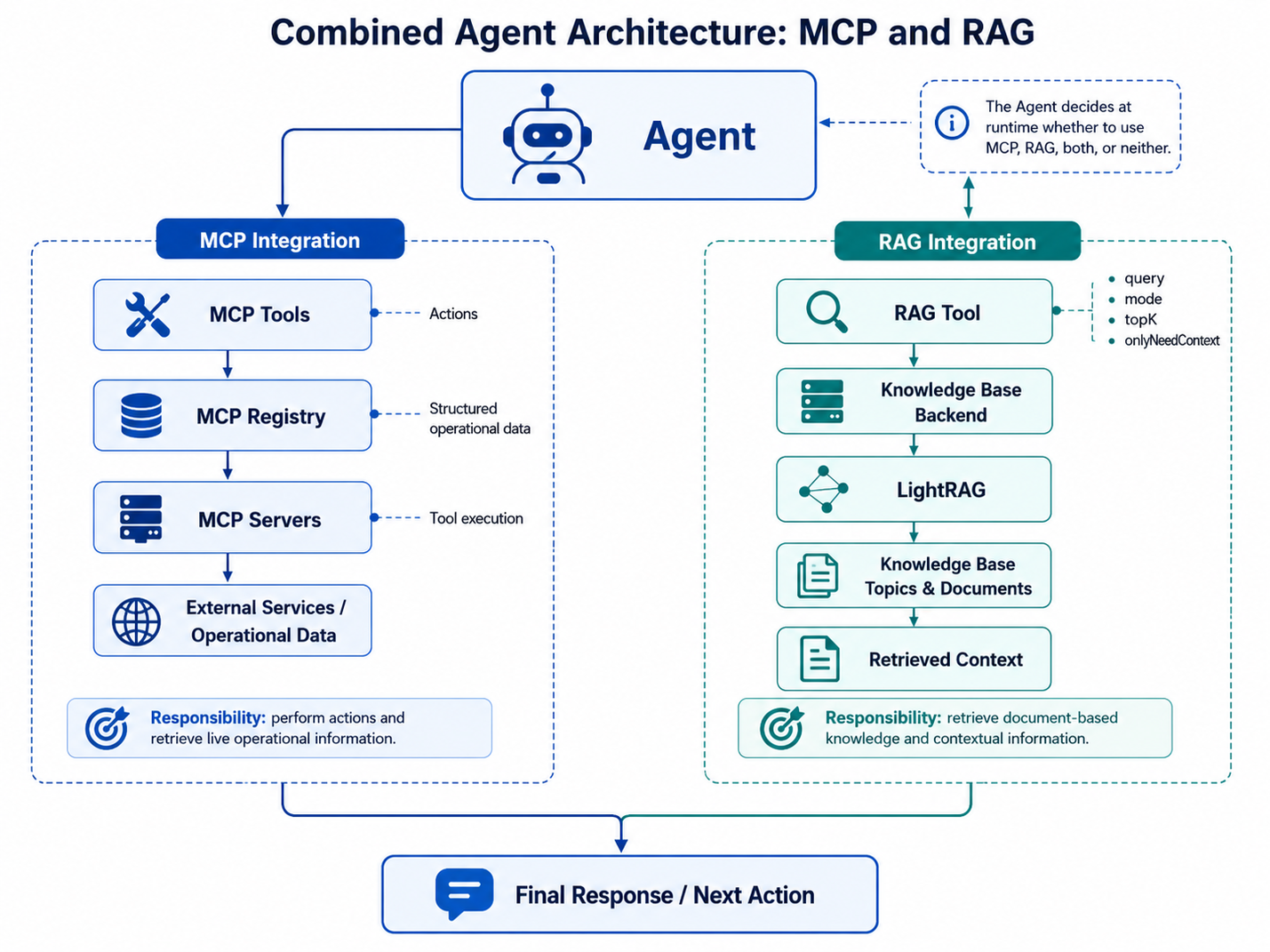
Figure 9 — Combined agent architecture: MCP and RAG.